
Your child cannot sit still. They bounce off walls, fidget through dinner, and turn a quiet living room into a sport. Teachers sigh. You’re tired. And somewhere a worry whispers: is something wrong with my restless child? Take a breath — because that very energy might be the best thing about them.
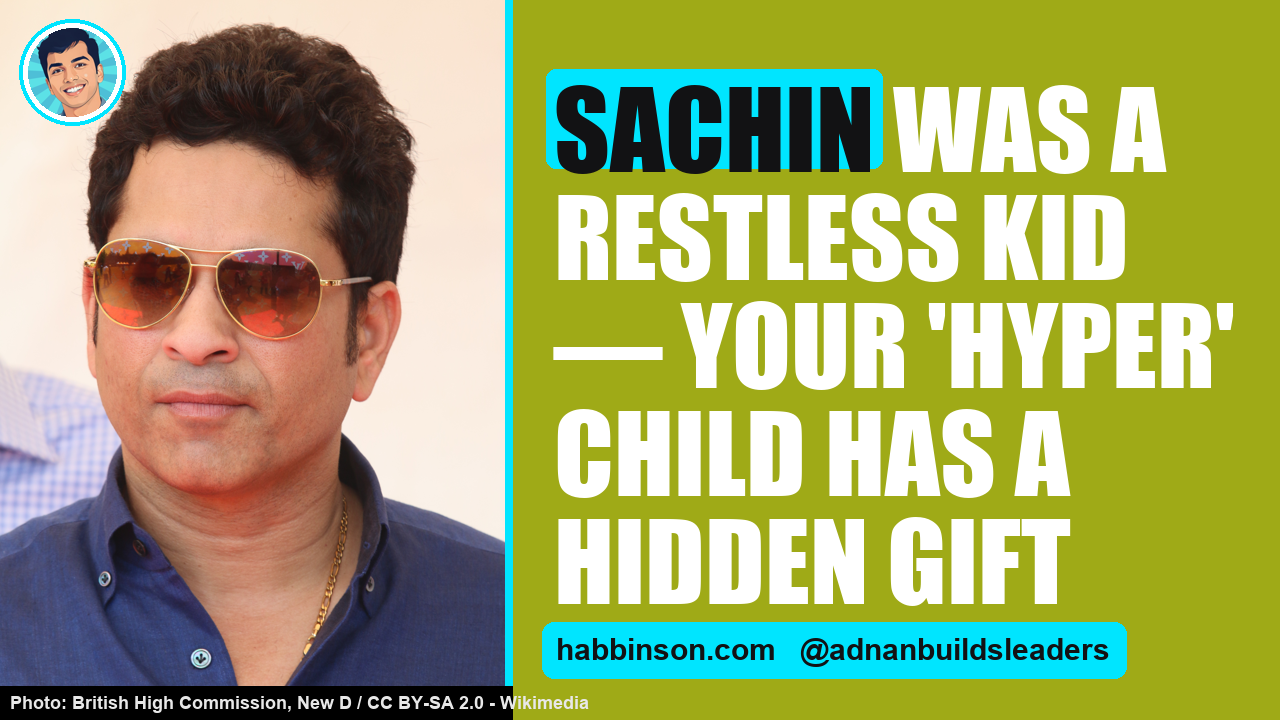
Picture a small, hyperactive boy in Mumbai who drove his family up the wall. He was so restless he was always in trouble — until his elder brother had an idea and walked him to a cricket coach. That boy was **Sachin Tendulkar**. The coach, Ramakant Achrekar, didn’t try to crush the energy. He pointed it at a cricket ball. The rest is history.
That’s the whole secret of raising a high-energy kid. You don’t switch the engine off. You give it a track. Let’s look at why restless kids struggle today, and exactly how to turn that drive into focus and confidence.
Is my restless child normal?
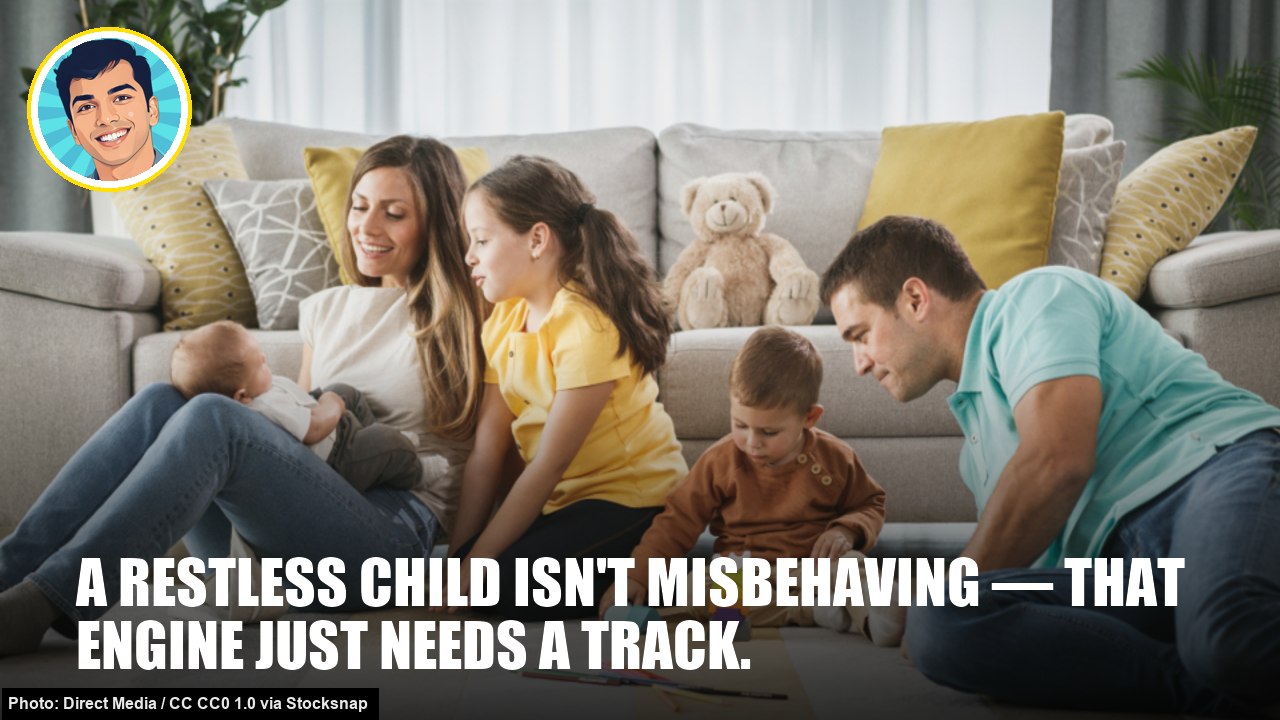
Almost certainly, yes. Lots of children are simply wired with high intensity. The Child Mind Institute draws a clear line between a high-energy child and ADHD: a very active child can still focus and finish a task when it matters, while a child with ADHD struggles to focus even when they try. Big energy alone is not a disorder. It’s a temperament.
What is a high-energy temperament? Temperament is the inborn style a child reacts with. A high-intensity child feels and moves at full volume — loud, fast, and physical. Handled well, that same intensity grows into enthusiasm, drive, and determination. The energy isn’t the problem; an outlet is the solution.
The American Academy of Pediatrics explains that every child has a natural temperament — and that the goal isn’t to change it, but to find a good fit between the child and their world. A restless child in a chair all day is a bad fit. The same child on a field is a star.
Why restless kids struggle more today
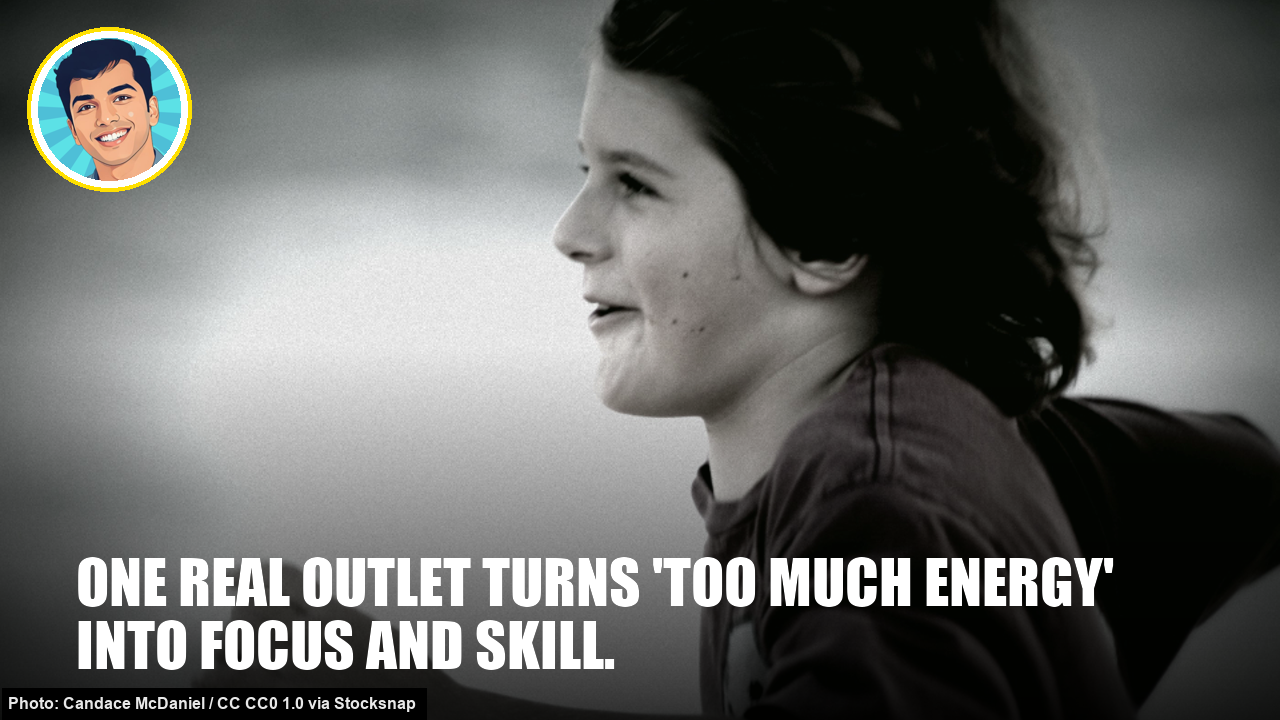
A century ago, a high-energy child ran, climbed, and worked outdoors for hours. The body burned what the mind couldn’t sit through. Today we ask kids to sit — at school, at homework, at screens — far longer than their bodies were built for. So the engine revs with nowhere to go, and we call it a problem.
But movement is fuel for the brain. The CDC says school-age children need at least 60 minutes of activity every day, and that active kids actually show better attention, memory, and mood. So the cure for the wiggles often isn’t more discipline. It’s more running.
How to channel a high-energy child: 4 steps

- Burn fuel first. Before homework or anything that needs sitting, give 20–30 minutes of hard play — running, a sport, the park. A tired body makes a calm mind.
- Find their ‘cricket’. Try sports, dance, martial arts, swimming — one real outlet where the energy is the point, not the problem. Let them help pick it.
- Channel, don’t crush. Swap ‘stop moving’ for ‘move here.’ Give jobs that use the body: carry, build, deliver, set the table. Energy with a purpose becomes help.
- Catch the strength, name it. When the drive shows up as effort or courage, say it out loud: ‘You don’t give up.’ Kids grow the qualities we name.
Notice what you’re really doing. You’re not managing a nuisance — you’re coaching a strength. The APA’s work on parenting with temperament in mind says it plainly: when you work with a child’s nature instead of against it, behavior improves and the bond gets stronger.
From restless kid to a child who stands out
Here’s the long game. That intensity, aimed well, becomes drive. The kid who couldn’t sit still becomes the teen who out-trains everyone, the adult who out-works the room. Sachin’s restlessness didn’t disappear — it got a direction, and it built the most disciplined batsman in the world.
Drive, focus under pressure, the refusal to quit — these are the exact traits that make a child a leader and, one day, stand out in any field. Your restless child isn’t behind. They’re loaded with fuel. Your job is the track. Our guides on building real confidence in kids and helping children learn naturally take it further.
The bottom line on a restless child
Stop trying to switch your restless child off. That energy is fuel, not a flaw. Burn it with daily play, point it at a real outlet, and name the drive when you see it — and watch a ‘problem’ turn into your child’s superpower.
Want a clear path to raise a focused, confident, driven child? Explore Habbinson’s courses — and don’t just raise a child, raise a leader.
Frequently Asked Questions
Is my restless child just hyperactive or is it ADHD?
High energy alone isn’t ADHD. A high-energy child can still focus and finish a task when it matters to them; a child with ADHD struggles to focus even when they try, across many settings. If focus problems are severe and constant, talk to your doctor — but most restless kids are simply intense by temperament.
How do I calm a restless child down?
Don’t start with ‘sit still.’ Start with movement — 20–30 minutes of hard play burns the fuel, and a tired body settles the mind. Then offer a focused, hands-on task. Calm comes after the energy has somewhere to go, not before.
Is too much energy in a child a bad thing?
No. Handled well, high energy becomes drive, enthusiasm, and determination — the engine behind athletes, founders, and leaders. The energy isn’t the problem; a lack of outlet is. Give it a track and it becomes a strength.
What sports are good for a high-energy child?
Any activity where moving is the point: running, football, swimming, cricket, martial arts, dance. The best one is the one your child enjoys enough to stick with, so let them help choose. Consistency matters more than the specific sport.
Will my restless child grow out of it?
The intensity usually stays — but it matures. With a good outlet, that same energy turns into focus and drive as they grow. The aim isn’t to erase it but to aim it, so it works for your child instead of against them.