
Your child gets stuck on a word. The first sound repeats, the face tightens, and your heart sinks a little. You want to jump in and finish it for them. If you have a child who stammers, you know that ache — the worry that this will hold them back forever. It won’t. Here’s why.
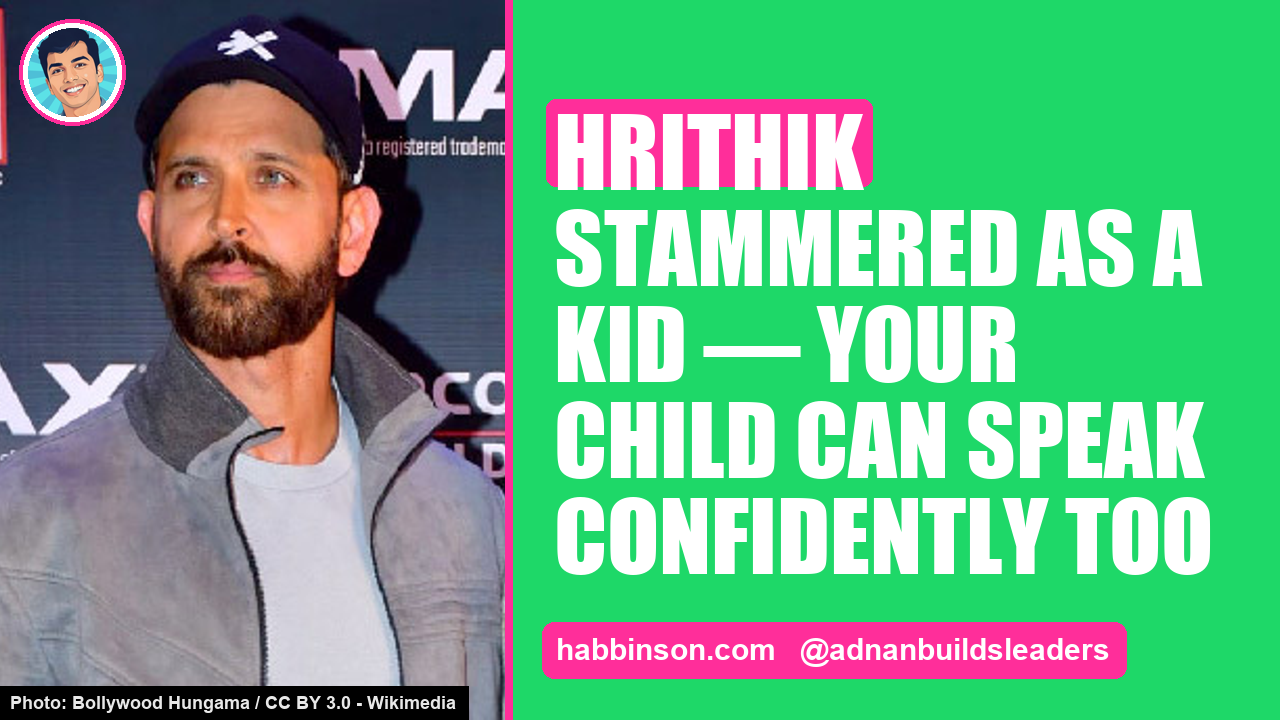
One of the biggest stars in India today stammered badly as a child. **Hrithik Roshan** struggled with a stammer growing up — so much that speaking in public terrified him. He didn’t ‘cure’ it with magic. He practised, got help, and learned to manage it. Today he delivers lines to millions. The stammer didn’t decide his future. What surrounded it did.
That’s the heart of it. A child who stammers is not broken, and the way the people around them respond matters enormously. Let’s look at what stammering actually is, what helps, and the calm habits that build a confident speaker.
Is a stammer normal in young children?
Often, yes. Many children pass through a phase of bumpy speech between two and five, while their ideas race ahead of their mouths. The American Academy of Pediatrics notes that some stuttering in toddlers and preschoolers is a normal part of learning to talk, and a lot of children simply grow out of it.
What is stuttering? Stuttering (or stammering) is when the flow of speech is broken by repeated sounds (‘b-b-ball’), stretched sounds, or blocks where a word won’t come out. It is not caused by nervousness or low intelligence. It’s a difference in how speech is coordinated — and with the right support, most children speak more fluently over time.
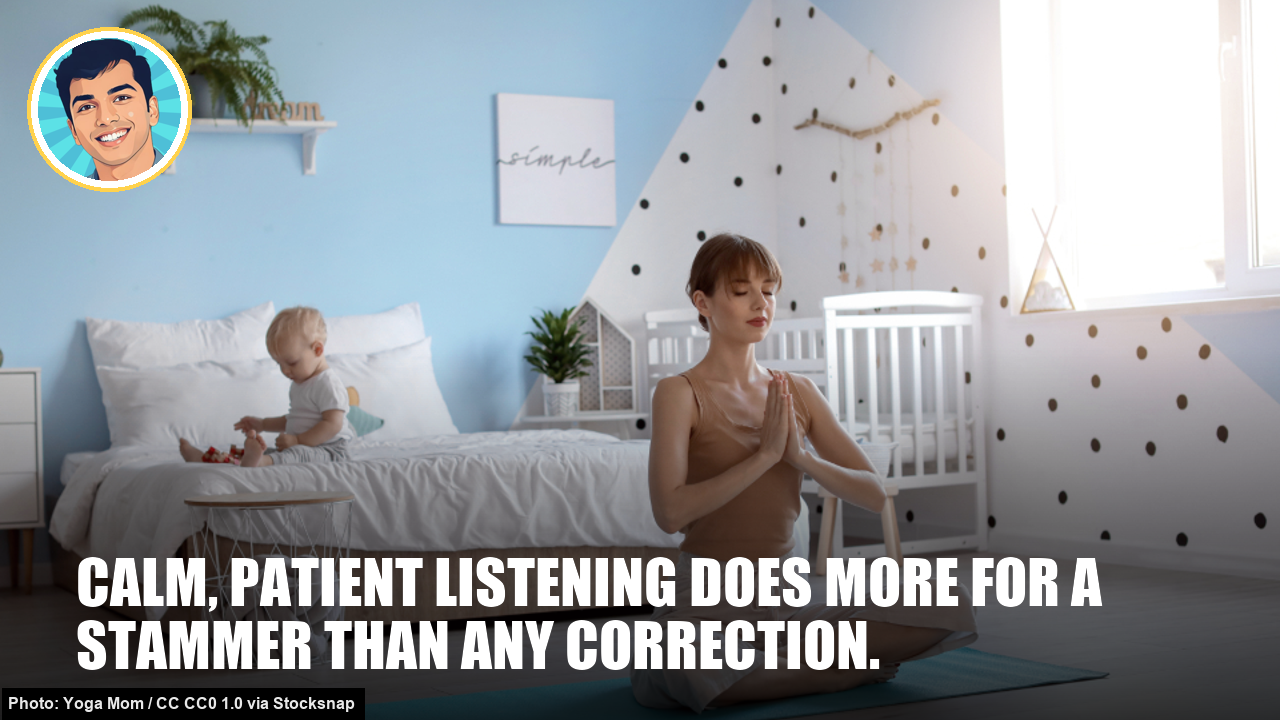
The key is what surrounds the stammer. The American Speech-Language-Hearing Association explains that stuttering is a real speech difference, not a sign of nerves or low ability — and that pressure tends to make it worse, while calm, patient listening tends to make it better.
What NOT to do when your child stammers

Most parents, trying to help, accidentally add pressure. The Stuttering Foundation’s suggestions for parents are clear about the traps to avoid — and they’re the opposite of what feels natural in the moment.
- Don’t say ‘slow down’ or ‘start again.’ It tells the child their speech is wrong and adds pressure.
- Don’t finish their sentences. Let them land the word themselves — it builds confidence, not dependence.
- Don’t rush them. A child who feels hurried stammers more, not less.
- Don’t make it a big deal in front of others. Quiet acceptance does more than any correction.
4 things that actually help a child who stammers

- Slow your own speech. Speak to them in an unhurried way with easy pauses. Children copy your pace, not your instructions.
- Wait a beat before you reply. A second or two of silence after they finish tells them there’s no rush.
- Ask fewer questions; comment more. Kids speak more freely sharing their own ideas than being quizzed. Say ‘That sounds fun’ instead of ‘And then what?’
- Give daily calm talk-time. A few minutes of full attention where they lead the play and you listen, relaxed, builds safety — and fluency follows safety.
And if the stammer is frequent, lasts beyond a few months, or comes with real struggle or fear, see a speech-language pathologist. Early help is gentle and effective. The Stuttering Foundation and ASHA both stress that the right early support makes a real difference.
From a stammer to a confident communicator
Here’s the bigger picture. A child who feels safe to speak — stammer and all — keeps speaking. A child who feels judged goes quiet, and silence is the real enemy. The goal was never perfect fluency by Tuesday. It’s a child who believes their voice is worth hearing.
Hrithik didn’t wait until his speech was flawless to chase a career built on speaking. He built confidence alongside the stammer, and the confidence won. That’s the gift you give your child: not a perfect mouth, but an unshakeable belief that they have something to say. Our guides on building real confidence in kids and when your child has a lot to say carry it forward.
The bottom line on a child who stammers
Stop trying to fix the stammer in the moment. Protect the speaking instead. Slow down, wait, listen, and never make it a big deal — and get gentle help if it’s frequent. Keep your child talking, and confidence will carry them the rest of the way.
Want a clear path to raise a confident, well-spoken child? Explore Habbinson’s courses — and don’t just raise a child, raise a leader.
Frequently Asked Questions
Is it normal for my young child to stammer?
Often, yes. Many children between two and five have a phase of bumpy, repeated speech as their ideas outrun their mouths, and a lot grow out of it. Stay calm and patient. If it’s frequent, lasts beyond a few months, or comes with visible struggle, check in with a speech-language pathologist.
Should I tell my child who stammers to slow down?
No. ‘Slow down’ or ‘start again’ tells your child their speech is wrong and adds pressure, which usually makes stammering worse. Instead, slow your own speech and pause before replying. Children copy your relaxed pace far more than they follow the instruction.
What causes stuttering in children?
Stuttering is a difference in how speech is coordinated — not a result of nervousness, fear, or low intelligence. It often runs in families. What surrounds it matters most: pressure tends to increase it, while calm, patient, unhurried listening tends to reduce it.
Will my child grow out of stammering?
Many children do, especially with calm support at home and early help when needed. Even when some stammering remains, children can absolutely become confident, capable speakers. The aim is a child who feels safe to keep talking, not flawless fluency by a deadline.
How can I build my stammering child’s confidence?
Protect their willingness to speak. Don’t finish their words, don’t rush them, and don’t make it a big deal in front of others. Give daily calm talk-time where they lead and you listen. Confidence grows when a child feels heard exactly as they are.