
So, your kid forgets their lunch. But, again. Your hand’s already on the car keys. Stop for a second. That forgotten lunch is a tiny, safe lesson — and every time you drive it over, you quietly teach your child that someone else will fix things. Knowing when to stop rescuing your child is one of the kindest, most powerful things you can do for them.
Still, learning how to stop rescuing your child doesn’t mean you stop caring. In fact, it means you care enough to let small struggles do their job. A child who never struggles never learns they can handle hard things. And that belief — “I can handle this” — is the root of real confidence.
This isn’t just a hunch. A large 2025 survey from the Institute for Family Studies found that parents who give kids more independence raise children with stronger mental health — even though that hands-off approach feels harder for the parent in the moment.
When should you stop rescuing your child?
Of course, stop rescuing your child when the struggle is safe and age-appropriate, like a forgotten lunch, a tricky zipper, or a tower that keeps falling. Stay close and coach, but let them do the doing. Small, survivable setbacks are how kids learn the powerful truth: ‘I can handle this myself.’
Why You Should Stop Rescuing Your Child
Every time you swoop in, you send a hidden message: this is too hard for you, so I’ll do it. Yet, do that enough and your child starts to believe it. Then, they stop trying. They wait to be saved. The very help meant to protect them chips away at their belief in themselves.
Instead, struggle is how the brain grows. In short, the APA’s work on children and independence shows that kids who get chances to make choices and face small failures develop stronger problem-solving and coping skills. Rescuing robs them of the rep.
As a result, what’s the difference between helping and rescuing? For example, helping gives your child what they need to do it themselves — a hint, a tool, encouragement. Meanwhile, rescuing does it for them and removes the challenge entirely. Helping builds skill and confidence; rescuing builds dependence. Ask: am I making this easier, or am I making them stronger?
When to Stop Rescuing Your Child (and When Not To)
After all, this is not about throwing your child in the deep end. It’s about letting them feel safe, small consequences while you stay close. Harvard’s research on executive function shows kids build planning and self-control by practicing them — with a supportive adult nearby, not doing it for them.
- On the other hand, step back: forgotten homework, a tower that keeps falling, a tricky zipper, a friend squabble.
- Likewise, step in: real danger, bullying, a task far beyond their age, a child who’s overwhelmed and flooded.
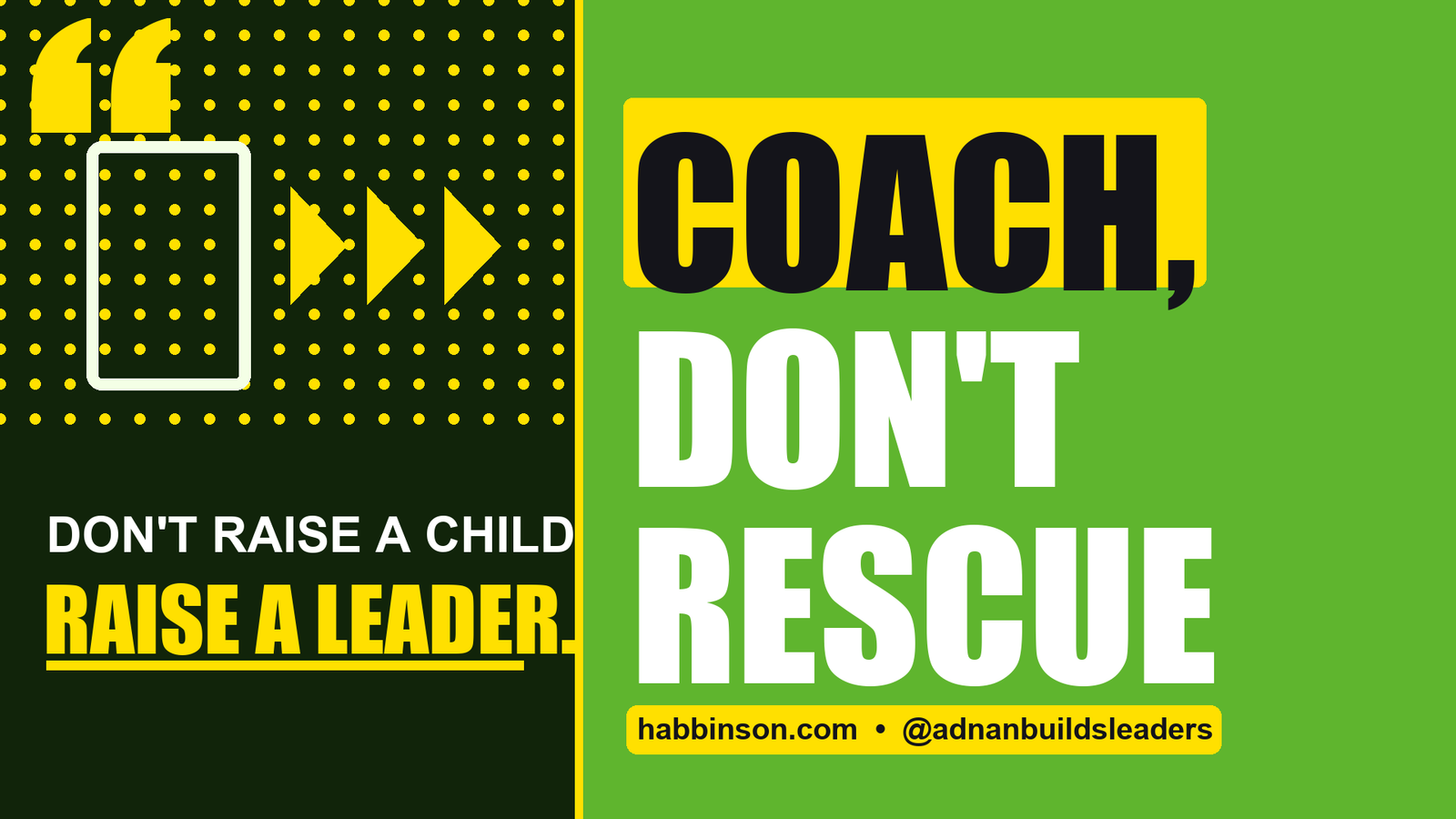
- Coach, don’t fix: “What have you tried? What could you do next?”
- Even so, let natural consequences teach: a cold lunch, a lost toy, a low mark on rushed work.
The CDC’s tips on giving good directions echo this — guide and support, but let kids do the doing. Your job is the safety net, not the crane.
The Finding Nemo lesson
Remember Finding Nemo? Marlin is so terrified of losing Nemo that he smothers him. Dory says the line that sums up the whole movie: you can’t never let anything happen to him — then nothing would ever happen to him. A life with zero risk is also a life with zero growth.
So, Nemo only becomes brave when he’s allowed to face things on his own. But, your child is the same. The scraped knees and forgotten lunches are not failures of your parenting. They’re the practice runs that build a capable, gritty kid.
How struggle builds leaders and entrepreneurs
Still, every future leader and founder needs one thing above all: the ability to fail, recover, and try again. In fact, a child who learns at six that a setback isn’t the end becomes a teen who takes smart risks and an adult who bounces back. Resilience isn’t taught in a lecture. It’s earned in small struggles.
Of course, want to go deeper? Our guides on why losing is a step toward winning and building real confidence in kids carry this forward.
3 ways to start stepping back this week
- Pause before you fix. Count to five and ask, “Can they handle this themselves?”
- Yet, swap the answer for a question: “What do you think you should do?”
- Then, let one natural consequence happen this week — small, safe, and a real teacher.
The bottom line
Instead, that forgotten lunch isn’t an emergency. In short, it’s a lesson. Stop rescuing your child from every small struggle, stay close as their safety net, and let them discover the most powerful feeling there is: “I can handle this myself.”
As a result, want a clear path to raise a resilient, confident, capable child? Explore Habbinson’s courses on communication, confidence, and leadership for kids — and don’t just raise a child, raise a leader.
Frequently Asked Questions
Isn’t it cruel to let my child struggle?
For example, not at all — as long as it’s safe and you stay supportive. Letting a child face small, age-appropriate challenges is how they learn they’re capable. Cruelty is leaving them alone with something far too big; coaching is staying close while they try.
When should you stop rescuing your child and let them try?
Meanwhile, ask whether the situation is unsafe or simply uncomfortable. After all, step in for danger, bullying, or tasks well beyond their age. Step back for the everyday frustrations — those are the safe practice ground for resilience.
My child gives up the second things get hard. What do I do?
On the other hand, resist fixing it. Instead, break the task into one small next step and praise the attempt. If you always rescue, giving up works for them. When effort gets noticed and rescue stops, persistence grows.
Does it feel unloving to stop rescuing your child?
Likewise, love isn’t the same as doing everything for them. You can be warm, close, and encouraging while still letting them do hard things. Kids feel most secure when they trust both your support and their own ability.
What’s a natural consequence?
Even so, it’s the real-world result of a choice, not a punishment you invent. Forget your lunch, you’re hungry till snack. Rush your homework, you get a lower mark. These lessons stick because they’re real, not lectured.
Does this apply to teenagers?
Even more so. Teens need room to make decisions and own the results before they leave home. Rescuing a teen from every mistake delays the independence they’ll need very soon.