
You’re at a birthday party. Another toddler the same age as yours is chatting in little sentences. Your child points and grunts. Your stomach drops. If you have a late talking child, you know that quiet panic well — the comparing, the late-night searching, the worry you’re missing something.
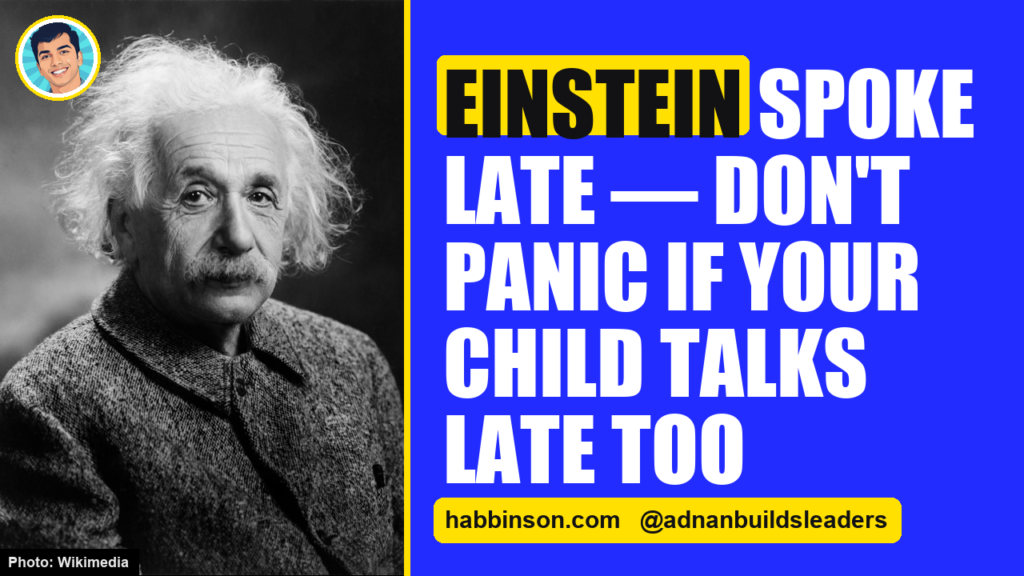
So take a breath. Here’s a fact that should help: the man whose name means “genius” was, by many accounts, slow to speak. Biographers of Albert Einstein note he didn’t talk much until around age four, and his own family worried. The label even stuck — some doctors now use the phrase “Einstein syndrome” for bright kids who talk late.
That’s not a promise your child is the next Einstein. But it is a reminder: a child’s timeline is not a race. Let’s look at what’s actually normal, when to watch closely, and how to gently grow those first words — starting today.
How common is a late talking child?
More common than you’d think. The American Academy of Pediatrics says plainly that delays in language are the most common type of developmental delay, and about one in five children learns to talk later than other kids their age. One in five. That’s a child in every small playgroup.
Speech experts have a calmer name for it. The American Speech-Language-Hearing Association calls it late language emergence — a slow start to talking in a child who is otherwise developing fine. It shows up in roughly 10 to 15 percent of toddlers, and many of these “late talkers” catch up to their peers by the early school years.
What is a late talking child? A late talking child is a toddler who is slow to start using words but is otherwise developing normally — playing, understanding, and connecting well. Specialists call this “late language emergence.” It affects about 10–15% of toddlers, and many catch up on their own or with simple support at home.
The past vs. now: why we panic more today
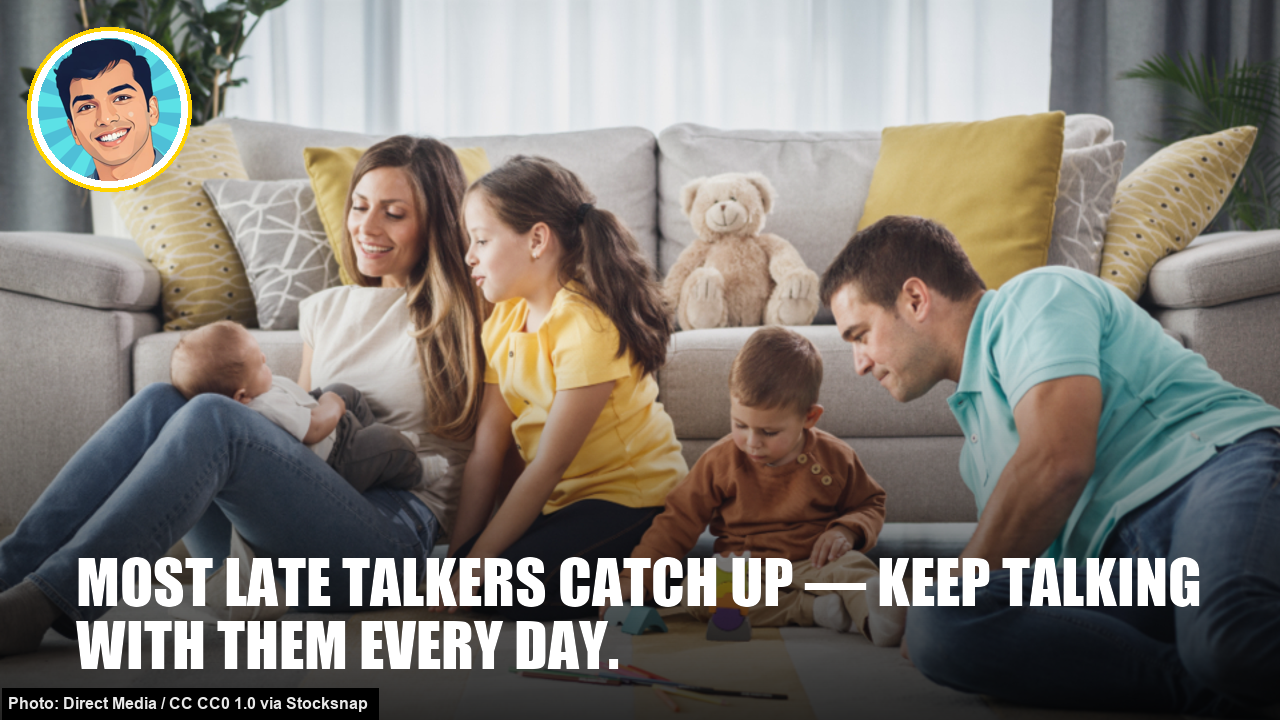
A generation ago, a quiet toddler was just “taking their time.” Grandparents shrugged and waited. Now we have group chats full of other people’s milestones and a feed of talking babies. So the worry arrives earlier and hits harder, even when nothing is wrong.
But comparison is a thief. Your child isn’t behind a leaderboard; they’re on their own clock. Still, watching milestones is smart — not to panic, but to know when a little help could speed things up. There’s a real difference between waiting wisely and just waiting.
Milestones to watch (and when to get help)
You don’t need to memorize a chart. You just need a few anchor points. The CDC’s milestones by age two give a simple guide: by around 24 months, most children use a couple of dozen words and start putting two together, like “more milk.”
- By 12 months: babbles, tries a word or two, points and gestures to share.
- By 18 months: uses several single words and follows a simple instruction.
- By 24 months: says about 50 words and joins two together (“want ball”).
- Green flag at any age: your child understands you well, makes eye contact, and connects — comprehension often comes before speech.
Here’s the key: if your child understands everything, plays well, and uses gestures, that’s reassuring even if words are slow. But if they’re losing words they had, not responding to their name, or not connecting, don’t wait — talk to your doctor and ask about a speech evaluation. Early help is gentle, and it works.
5 simple ways to grow a late talking child’s words
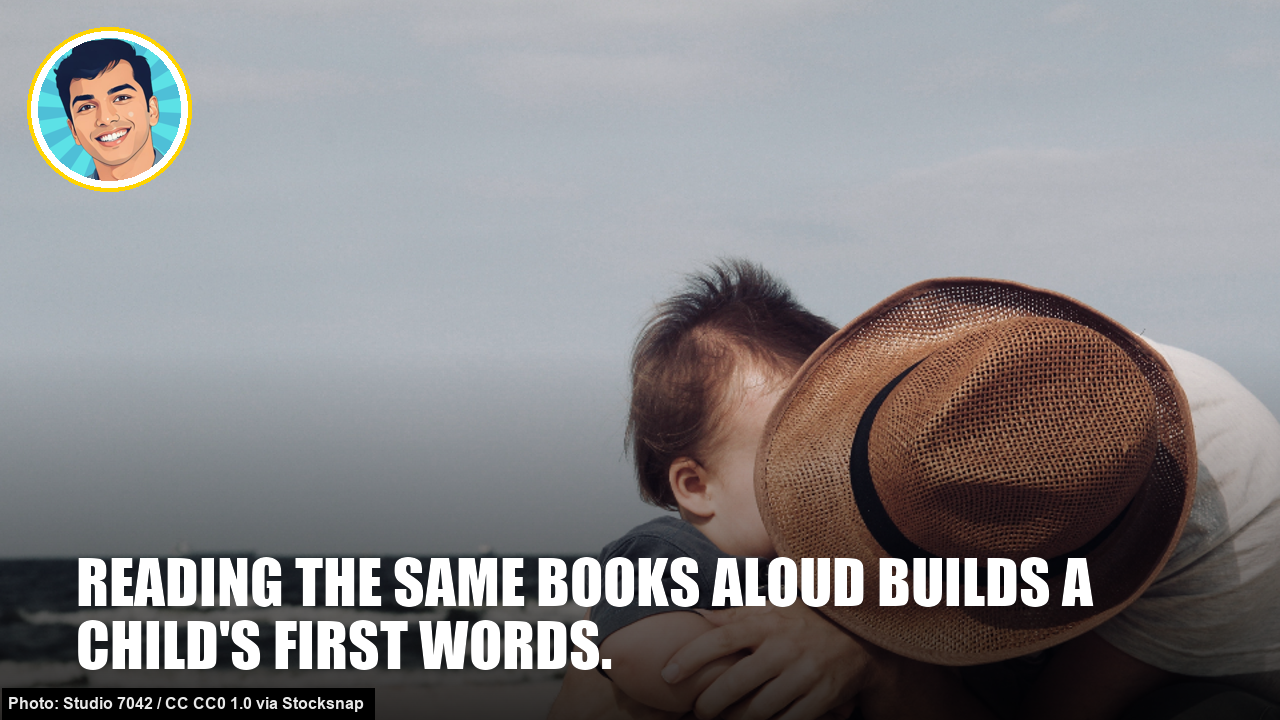
You are your child’s best speech tool — no flashcards required. The trick is to flood their day with words tied to what they care about, right now, in real moments.
- Narrate the day out loud: “We’re washing the red cup. Warm water!” Words stick when they match what your child sees.
- Pause and wait. Ask “Want up?”, then count to five in your head. Silence gives your child room to try a sound.
- Add one word to theirs. They say “car”; you say “fast car!” You’re showing the next step, not correcting.
- Read the same picture book daily and let them fill the gap: “The cow says…?” Repetition builds first words.
- Cut background screens and TV. Real back-and-forth talk with you beats any app for building language.
Why does this work so well? Because language grows from connection, not drilling. AAP-backed research shows that rich, back-and-forth conversation early on is linked to stronger language skills and even higher IQ scores at school age. The chatting you do today is an investment that pays off for years.
From first words to a child who stands out
Step back and see the bigger picture. The goal was never just “talking on time.” It’s raising a child who can say what they think, ask for what they need, and connect with people. That skill — communication — is what makes a child a leader on a playground and, later, in any room they walk into.
A late start says nothing about that future. Einstein didn’t just learn to talk; he learned to explain ideas that reshaped the world. Your job isn’t to win a milestone race. It’s to keep the words coming, warm and steady, so your child grows into a confident communicator. Our guides on helping children learn naturally and building real confidence in kids carry this forward.
The bottom line on a late talking child

Stop racing your child against other people’s toddlers. A late talking child is common, often temporary, and says nothing about how bright or capable your child will be. Watch the milestones, flood their day with warm words, and get gentle help if the green flags aren’t there.
Want a clear path to raise a confident, well-spoken child? Explore Habbinson’s courses on communication, confidence, and leadership for kids — and don’t just raise a child, raise a leader.
Frequently Asked Questions
Should I worry about my late talking child if they understand everything?
Good comprehension is a reassuring sign. A child who understands you, makes eye contact, and uses gestures is connecting well, even if words are slow. Keep talking with them and watch the milestones — but strong understanding usually means the words are on their way.
When should a late talking child see a doctor?
Talk to your doctor if your child is losing words they once used, not responding to their name, not pointing or gesturing, or not connecting with you. Also check in if they have very few words by age two. Early speech help is simple and effective, so it’s always okay to ask.
Did Einstein really talk late?
According to several biographers, Einstein was slow to speak as a young child and his family worried. The story is well known enough that some doctors use the term “Einstein syndrome” for bright children who talk late. It’s a comforting reminder that a slow start doesn’t decide a child’s future.
Can screens cause a speech delay?
Screens don’t replace what builds language: real, back-and-forth talk with a caring adult. Heavy background TV and passive app time can crowd out that conversation. Cutting screens and adding more face-to-face chatting is one of the simplest ways to help words grow.
How can I help my toddler talk more at home?
Narrate your day, pause to give them a turn, add one word to whatever they say, and read the same picture books often. Tie words to what your child cares about in the moment. These small, daily habits grow language faster than any flashcard.
Will a late talker catch up?
Many late talkers do catch up to their peers by the early school years, especially with rich talk at home and early help if needed. Every child is different, so watch the milestones — but a late start is common and often temporary.