
So, your child is melting down in the cereal aisle. But, face red, fists tight, the whole store watching. So you say the two words every parent says: “Calm down.” And it does nothing. If anything, it pours fuel on the fire. Sound familiar? This is the calm, no-yelling way to calm an angry child, even in the middle of a full meltdown.
Still, here’s the thing nobody tells you about how to calm an angry child: a child in full meltdown literally cannot calm down on command. In fact, the thinking part of their brain has gone offline. Asking them to reason is like asking someone to read a book during an earthquake.
A 2024 Harvard Health piece on co-regulation in children and teens explains it simply — young brains borrow calm from a grown-up before they can make their own. Of course, that’s the whole game. Let’s break down how it works and what to say tonight.
How do you calm an angry child fast?
To calm an angry child, get calm yourself first, then name the feeling out loud: ‘you’re so mad the screen went off.’ A steady voice and a slow breath they can copy settle the body. Connection comes before any lesson, because a flooded brain can’t think clearly yet.
Why ‘calm down’ backfires every time
Yet, when big feelings hit, the emotional brain takes the wheel. Then, scientists call it flooding. Instead, heart races, ears stop hearing, logic shuts off. In that state your child isn’t choosing to be difficult. They’ve lost access to the part of the brain that chooses.
So “calm down” lands as a demand they can’t meet. It can even feel like a put-down — like you’re annoyed by their feeling instead of helping with it. New 2025 work from BrainFacts on how parents model emotional regulation shows kids settle faster by copying a calm adult, not by being ordered to relax.
In short, what is co-regulation? Co-regulation is when a calm adult helps a child settle their nervous system before the child can do it alone. A steady voice, a slow breath, a hand on the back — these borrow your calm and lend it to your child. Over many repeats, kids turn that borrowed calm into their own self-control.
Name It to Tame It: How to Calm an Angry Child
Before you fix anything, name the feeling out loud. As a result, “You’re really angry the screen turned off.” That’s it. You’re not agreeing the meltdown is okay — you’re showing your child that the storm inside them has a name.
For example, why does this help? Meanwhile, a 2025 study on parents’ and toddlers’ emotion talk found that children who hear feelings named build a stronger emotion vocabulary and better self-control. Naming a feeling actually quiets the alarm center in the brain. The feeling shrinks the moment it’s understood.
- After all, wrong move: “Stop crying, it’s not a big deal.” → Message: your feeling is wrong.
- Right move: “You wanted more time. That’s so frustrating.” → Message: I get it, I’m here.
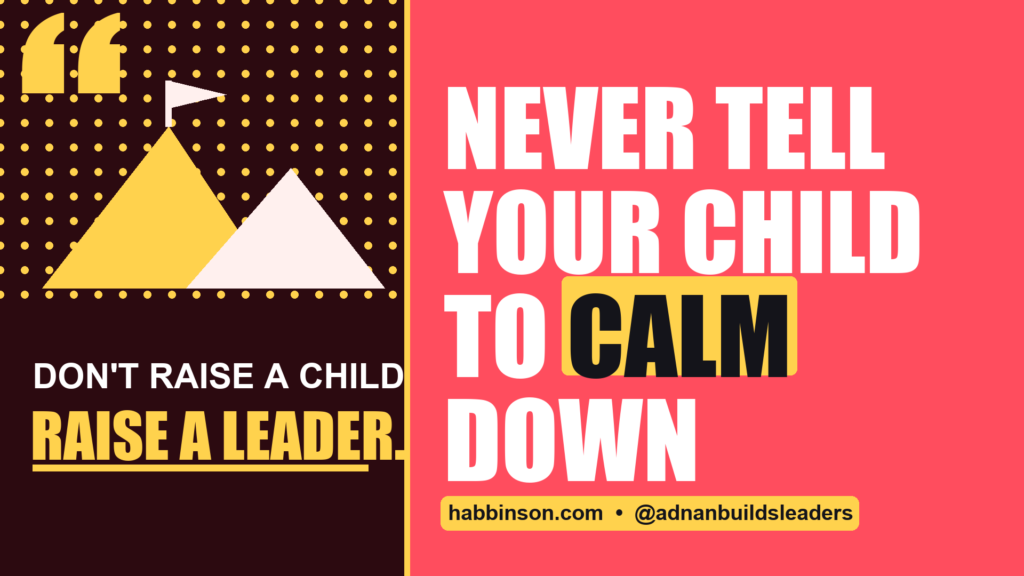
- On the other hand, wrong move: “Calm down right now.” → A demand a flooded brain can’t obey.
- Likewise, right move: a calm voice and a slow breath they can copy. → A path back to calm.
3 things to say instead of ‘calm down’
- “I’m right here. You’re safe.” — Safety first. The body settles before the mind can.
- “You’re so mad. Tell me with your words or show me.” — Gives the feeling an exit that isn’t hitting.
- “Let’s breathe together. In… and out.” — You do it first; they follow your lead, not your order.
Notice you’re not solving the problem yet. Connection comes before correction, every time. Once the storm passes, then you talk about what to do differently. The CDC’s tips on communicating with your child put the same idea front and center: connect first, teach second.
The Inside Out lesson every parent already knows
Even so, remember Inside Out? So, Riley doesn’t snap out of her sadness when Joy tells her to cheer up. She settles only when Sadness sits beside her and lets the feeling be felt. That single scene is the best parenting lesson in any movie.
But, kids are the same. Still, they don’t need their feelings fixed or argued away. They need a calm someone to sit beside the feeling until it passes. Be the Sadness on the bench — steady, close, quiet. That’s how the storm ends faster.
How calm kids become confident communicators
In fact, this is bigger than one meltdown. Of course, a child who can name what they feel can tell a teacher when something’s wrong, handle a friend fight without fists, and speak up under pressure. Emotional control is the floor that confidence and leadership are built on.
Yet, when kids learn to steady themselves, they take social risks — they raise a hand, lead a group, calm a friend down. Our guides on building real confidence in kids and building a rewarding relationship with your children carry this forward.
Quick Ways to Calm an Angry Child in the Moment
- Lower your own voice instead of raising it. Your calm is contagious.
- Then, get down to their eye level. Looming over a child reads as a threat to a flooded brain.
- Save the lesson for later. Teach when they’re calm, not while they’re crying.
The bottom line
Stop asking your child to do something their brain can’t do yet. Don’t tell an angry child to calm down — be the calm they borrow. Name the feeling, lend your steadiness, and teach once the storm has passed.
Instead, want a clear path to raise a calm, confident, well-spoken child? Explore Habbinson’s courses on communication, confidence, and leadership for kids — and don’t just raise a child, raise a leader.
Frequently Asked Questions
Why does telling my child to calm down make it worse?
Because a child in meltdown has lost access to the thinking part of their brain. “Calm down” is a demand they physically can’t meet in that moment, and it can feel like you’re annoyed by their feeling. Help them settle first with a calm voice and presence.
What should I say instead of calm down?
Name the feeling and offer safety: “You’re really angry, and I’m right here.” Then breathe slowly so they can copy you. Connection settles the body; only then can the mind think clearly again.
Isn’t naming feelings just rewarding bad behavior?
In short, no. Naming a feeling isn’t the same as approving an action. You can say “You’re furious” and still hold the limit “but we don’t hit.” Naming calms the brain so the child can actually hear the limit.
How long does it take to calm an angry child?
It varies, but most storms ease within a few minutes once a child feels understood and safe. As a result, fighting the feeling makes it last longer. Sitting beside it calmly makes it shorter.
My child is older — does this still work?
For example, yes. Co-regulation works for teens too. They’re just as tuned to whether you’re steady or reactive. Stay calm, name what you see, and skip the lecture until the wave has passed.
What if you can’t calm an angry child?
It happens to every parent. Take your own slow breath first, or step back a moment if it’s safe. You can’t lend calm you don’t have, so steady yourself before you steady them.